


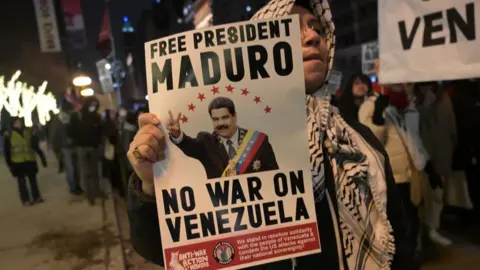
Early Monday, a handcuffed, prison-uniform-wearing Nicholas Maduro exited a military helicopter in Manhattan, surrounded by federal marshals.
The Caracas chief had spent the night in a well-known federal detention center in Brooklyn, before authorities moved him to a Manhattan court to face criminal charges.
The chief law enforcement officer has asserted Maduro was delivered to the US to "answer for his alleged crimes".
But international law experts challenge the legality of the administration's maneuver, and argue the US may have breached global treaties concerning the military intervention. Domestically, however, the US's actions enter a legal grey area that may nonetheless result in Maduro being tried, despite the methods that delivered him.
The US asserts its actions were permissible under statute. The administration has charged Maduro of "narco-terrorism" and abetting the transport of "thousands of tonnes" of cocaine to the US.
"All personnel involved acted with utmost professionalism, firmly, and in strict accordance with US law and standard procedures," the Attorney General said in a official communication.
Maduro has repeatedly refuted US claims that he oversees an narco-trafficking scheme, and in the federal courthouse in New York on Monday he pled of innocent.
Global Law and Enforcement Concerns
While the indictments are focused on drugs, the US legal case of Maduro comes after years of condemnation of his governance of Venezuela from the United Nations and allies.
In 2020, UN fact-finders said Maduro's government had perpetrated "grave abuses" amounting to international crimes - and that the president and other senior figures were implicated. The US and some of its partners have also charged Maduro of electoral fraud, and did not recognise him as the legal head of state.
Maduro's alleged connections to drugs cartels are the crux of this prosecution, yet the US methods in bringing him to a US judge to respond to these allegations are also under scrutiny.
Conducting a armed incursion in Venezuela and taking Maduro out of the country under the cover of darkness was "entirely unlawful under international law," said a expert at a law school.
Experts pointed to a host of concerns raised by the US operation.
The UN Charter prohibits members from threatening or using force against other states. It allows for "military response to an actual assault" but that risk must be looming, experts said. The other allowance occurs when the UN Security Council approves such an action, which the US did not obtain before it took action in Venezuela.
Treaty law would view the illicit narcotics allegations the US accuses against Maduro to be a law enforcement matter, analysts argue, not a armed aggression that might permit one country to take covert force against another.
In official remarks, the government has framed the operation as, in the words of the top diplomat, "essentially a criminal apprehension", rather than an hostile military campaign.
Precedent and US Legal Debate
Maduro has been formally charged on drug trafficking charges in the US since 2020; the justice department has now issued a superseding - or revised - charging document against the Venezuelan leader. The executive branch contends it is now executing it.
"The mission was executed to facilitate an ongoing criminal prosecution linked to large-scale illicit drug trade and related offenses that have fuelled violence, upended the area, and been a direct cause of the narcotics problem claiming American lives," the AG said in her statement.
But since the apprehension, several scholars have said the US broke treaty obligations by removing Maduro out of Venezuela unilaterally.
"One nation cannot invade another sovereign nation and apprehend citizens," said an authority in international criminal law. "If the US wants to arrest someone in another country, the established method to do that is a legal process."
Regardless of whether an individual faces indictment in America, "America has no legal standing to go around the world executing an legal summons in the lands of other independent nations," she said.
Maduro's attorneys in the Manhattan courtroom on Monday said they would challenge the propriety of the US mission which transported him from Caracas to New York.
There's also a ongoing legal debate about whether commanders-in-chief must follow the UN Charter. The US Constitution regards international agreements the country signs to be the "binding legal authority".
But there's a notable precedent of a presidential administration claiming it did not have to follow the charter.
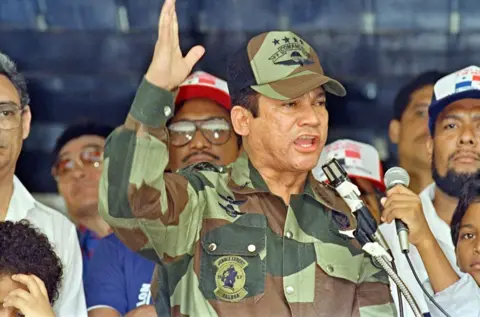
In 1989, the US government captured Panama's strongman Manuel Noriega and took him to the US to answer illicit narcotics accusations.
An confidential Justice Department memo from the time contended that the president had the legal authority to order the FBI to detain individuals who flouted US law, "even if those actions violate established global norms" - including the UN Charter.
The author of that document, William Barr, became the US AG and brought the initial 2020 charges against Maduro.
However, the memo's logic later came under criticism from academics. US courts have not made a definitive judgment on the issue.
US Executive Authority and Legal Control
In the US, the question of whether this action broke any US statutes is complicated.
The US Constitution vests Congress the authority to declare war, but puts the president in control of the troops.
A 1970s statute called the War Powers Resolution places restrictions on the president's ability to use the military. It compels the president to inform Congress before sending US troops into foreign nations "whenever possible," and notify Congress within 48 hours of deploying forces.
The government did not give Congress a prior warning before the action in Venezuela "because it endangers the mission," a cabinet member said.
However, several {presidents|commanders


